Protect Temperature-Sensitive Products
Refrigerated Fleet Support Built
Around Cold-Chain Reliability
Temperature-controlled transportation requires dependable vehicles, properly operating refrigeration systems and disciplined fleet management. When equipment fails or a delivery is delayed, the risk extends beyond downtime to product quality, customer relationships and inventory loss.
Carmichael NationaLease supports Chicago-area businesses that transport meat, seafood, dairy, produce, prepared foods and other temperature-sensitive products. Programs can include refrigerated truck leasing, commercial rentals, preventive maintenance, refrigeration service, emergency road support and dedicated logistics.
Every refrigerated operation is different. Carmichael works with customers to understand cargo temperature requirements, route length, stop frequency, loading methods, delivery windows and vehicle utilization before recommending equipment and support.
Refrigerated Transportation
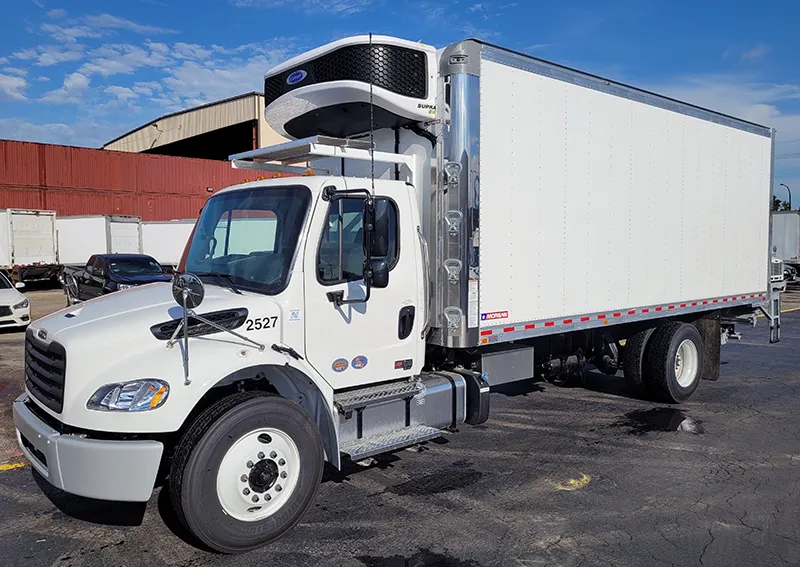
Specify Refrigerated Vehicles for the Route and Cargo
The right refrigerated vehicle depends on much more than cubic capacity. Insulation, refrigeration-unit performance, door configuration, lift-gate requirements, payload, stop frequency and ambient conditions can all affect operating efficiency.
Carmichael can help evaluate the work and specify refrigerated trucks or trailers suited to the customer’s cargo and distribution pattern.
Refrigerated Transportation
Preventive Maintenance for Refrigerated Fleets
Refrigerated operations rely on both the chassis and the temperature-control system. A strong maintenance program should address the vehicle, refrigeration unit, electrical systems, seals, doors, flooring and other components that affect product protection.
Scheduled inspections can reduce the risk of mechanical failures, temperature-control problems and route interruptions while producing better maintenance records for fleet managers.
Refrigerated Transportation
Temporary Refrigerated Capacity
Seasonal food demand, special events, new customer programs and unexpected equipment downtime can create an immediate need for refrigerated vehicles.
Commercial rentals can provide temporary capacity while a business evaluates a longer-term requirement or waits for permanent equipment, subject to available configurations.
Refrigerated Transportation
Visibility, Drivers and Delivery Execution
Technology can improve visibility into vehicle location, route progress and delivery performance. In a dedicated program, Carmichael can also help coordinate drivers, routing, maintenance and operating procedures around the customer’s cold-chain requirements.
The specific temperature-monitoring, telematics and reporting capabilities depend on the equipment and systems selected for the program.
A Program Built Around Your Operation
Equipment, Maintenance and Logistics From One Partner
Carmichael can support the vehicle, the maintenance program or the broader transportation operation. The right combination depends on routes, cargo, delivery schedules, fleet size and the responsibilities the customer wants to retain internally.
Every program is defined through a detailed review and written agreement so equipment, services, performance expectations and responsibilities are clear.
Discuss Your Requirements
Frequently Asked Questions
Refrigerated Transportation
What products can refrigerated trucks transport?
Refrigerated vehicles are commonly used for meat, seafood, dairy, produce, prepared foods and other products requiring controlled temperatures. The vehicle and refrigeration specification should match the cargo requirements.
Can Carmichael provide short-term refrigerated truck rentals?
Refrigerated rental equipment may be available for seasonal demand, temporary routes or replacement needs. Customers should confirm current inventory and configuration availability.
Does Carmichael service refrigeration units?
Carmichael lists refrigeration and air-conditioning among its commercial repair capabilities. Specific unit brands, authorizations and service availability should be confirmed when scheduling.